By Suraj Nair, Vice President, Ankur Capital · 23/10/2026 · 5 minute read

By Suraj Nair, Vice President, Ankur Capital · 23/10/2026 · 5 minute read
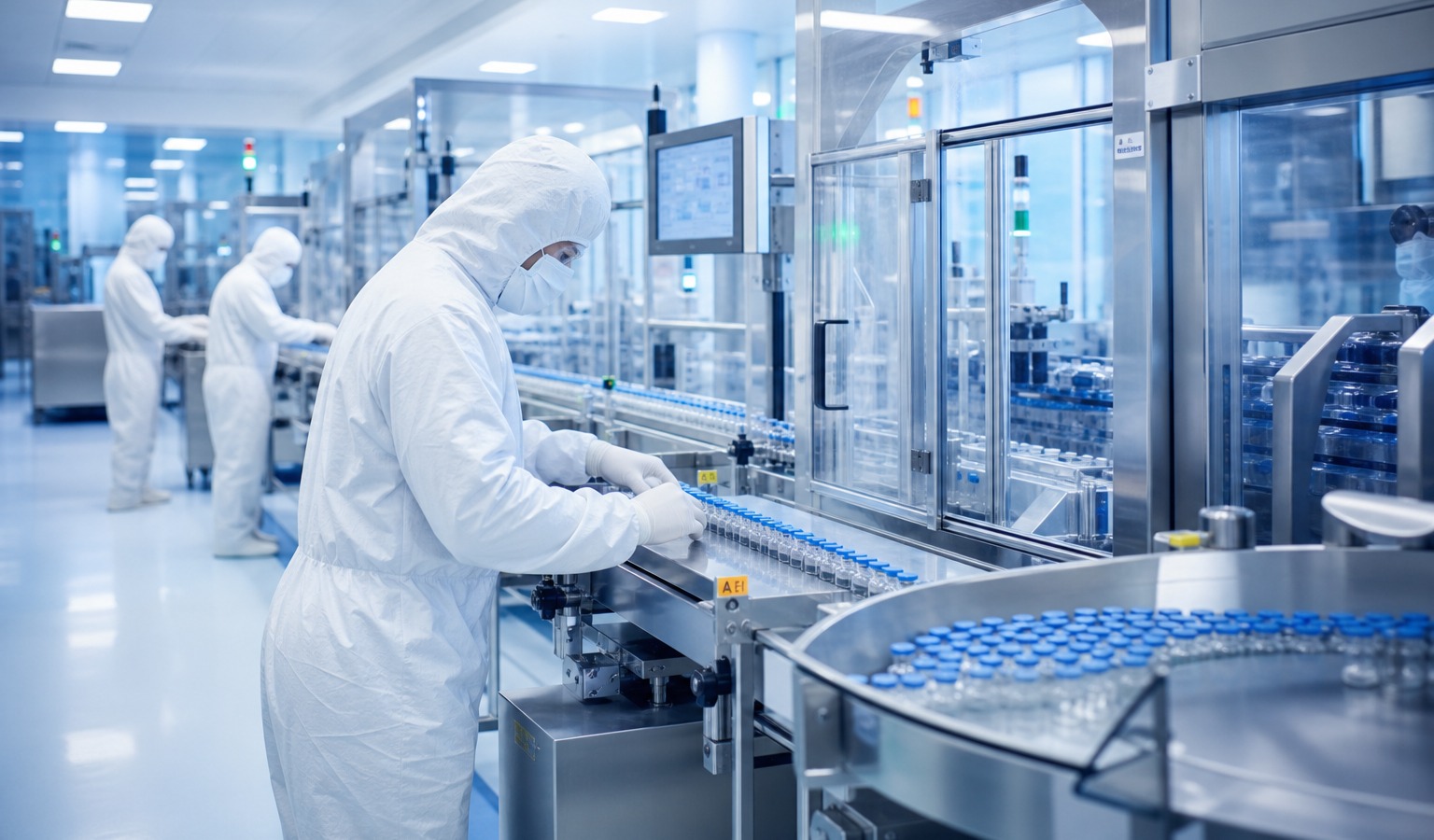
Manoj Joshi, Secretary of the Department of Pharmaceuticals, Government of India, in an interview recently announced plans to revamp the bulk drug Production Linked Incentive (PLI) scheme to support research and development as well as infrastructure and financing for producing active pharmaceutical ingredients (APIs), key starting materials (KSMs) and advanced intermediates for bulk drugs. The objective is to go beyond just production incentives to promote new technology development and compete in the global markets. The aim is to provide grants for technology development, research and infrastructure support, and better financing options. The revamp works alongside complementary programs like the ₹10,000 crore Biopharma SHAKTI Scheme for biologics, the Promotion of Research and Innovation in Pharma MedTech Sector (PRIP) Scheme for R&D (₹5,000 crore) accessible to startups, and state/central Bulk Drug Parks in states like Andhra Pradesh, Gujarat, and Himachal Pradesh. The Ministry of Chemicals and Fertilizers also recently announced 41 projects selected under the PRIP scheme with an investment of ₹1,600 crores.
Hard to compete with China on bulk drugs, low value KSMs, generic intermediates and APIs
It’s well known that China dominates the global production of KSMs as well as fine and specialty chemical intermediates for most of the pharmaceutical drugs. The PLI scheme was first approved in 2020 with a financial outlay of 6,940 crores to strengthen domestic manufacturing of 41 products and reduce import dependence on bulk drug APIs and other generic low value pharmaceutical intermediates. Since then, 48 projects have been approved, 39 of which have been commissioned (28 APIs/KSMs) with investments of around 5,210 crores. Some of the projects include fermentation based production of Penicillin-G, Clavulanic Acid and Rifampicin, which were earlier largely dependent on imports. While these projects have started generating revenue including export opportunities, competing with Chinese competitors has been a challenge with Chinese import of APIs into India standing at 29,064 crores in 2024-25, up from 27,055 crores a year earlier, driven by low cost production capabilities utilizing their massive investments in infrastructure. Price cuts from Chinese competitors have turned some of these projects into loss making endeavors. Competing with China globally on cost advantages for most of the upstream commodity APIs and intermediates remains very difficult.
Indian API and CDMO players are moving up the value chain towards high margin products and business models
Global pharmaceutical companies are now looking to diversify their API and intermediates supply chain from China and are seeking integrated discovery-to-commercial offerings for complex APIs such as peptides, antibody-drug-conjugates (ADC), Highly Potent APIs (HPAPIs) among others. Indian API and intermediates manufacturers are looking to cash in on the opportunity. Divi’s is adding 3,000L Solid-Phase Peptide Synthesis (SPPS) reactors for peptides, while Neuland commissioned a 7,000L peptide module on 15 September 2026. Secondly, the CDMO industry in India is quickly transforming into integrated CRDMOs (Contract Research, Development, and Manufacturing Organizations) with value creation coming from custom manufacturing and long term exclusive contracts for patented drugs. Sai Life Sciences saw its CDMO revenue grow 55% in the first nine months of FY26 compared to 9MFY25, and over 90% of it comes from large pharma. Neuland’s revenue rose 116% in Q1 FY27 on commercial custom projects. Divi’s custom synthesis business grew 45% in Q1 FY27 and is now 60% of its revenue. Laurus Labs’s CDMO revenue grew 67% in the same quarter and is now 43% of the company’s revenue. All these companies are investing heavily in capex to meet the global standards for complex API manufacturing. As per ICRA, the industry which is worth $3.4-4 billion currently (2-3% of the global CRDMO market) is expected to grow at a CAGR of 15-16% annually over the next few years. However, scaling the CRDMO business has its own set of challenges. Cohance’s revenue fell 23% in Q1 FY27 as customers destocked and shipments slipped, and new suppliers can take years to be qualified into a customer’s filed manufacturing route. Then there is the issue of section 232 in the US (effective September 29, 2026) with a 100% duty on imported patented drugs and their ingredients, including APIs and key starting materials. The rate is 20% for companies with approved US onshoring plans, rising to 100% in April 2030, and 0% until January 2029 for companies with both a US pricing agreement and an onshoring plan. Generics are exempt for now. How the duty applies to APIs made by Indian CDMOs for innovators is not yet clear, and it could affect the fast-growing custom synthesis business.
The next wave of generics may find their API and intermediates partner in India.
The global pharma industry is facing a massive $300B worth loss of branded sales by 2030 due to the expiry of patents for some of their blockbuster products. This is triggering the next wave of generics manufacturing in India. Novo Nordisk's primary product patent for semaglutide (GLP-1 drugs) in India expired on March 20, 2026. This was followed by more than 10 generic makers launching their brands in India with more than 60-70% price cut compared to originator molecules. While most of the APIs for semaglutide was imported, Indian firms have started backward integrating and building out peptide manufacturing. Dr. Reddy’s Laboratories (DRL) has invested heavily in peptide facilities, and Granules India launched Ascelis Peptides (now known as Senn Tides) after its acquisition of Swiss-based Senn Chemicals AG.
Novel technological approaches needed to build out an integrated pharma ecosystem for the next generation of products.
API manufacturers are investing in technologies to serve global pharmaceutical companies. Some of these technologies include
However, merchant supply of building blocks and advanced intermediates for these complex APIs (protected amino acids, phosphoramidites, containment-grade intermediates) remains limited in India at commercial scale, and producing them depends on similar technologies. Buyers are likely to keep sourcing much of this from China, but reports suggest some innovators and CDMOs want an Indian second source to reduce supply and policy risk, which is an opening for a supplier that can match quality and come close on cost. While we expect some of the technology development to happen through backward integration by existing API manufacturers, we believe startups could fill this gap by developing safer, cleaner and more cost-effective processes for complex intermediates and licensing them to CDMOs and API makers, with partners’ plants providing the scale.
If you are building in this space, we would love to speak with you.

Registered Corporate Office
Ankur Fincon Management Pvt Ltd
Unit 5 Jetha Compound,
Byculla (E), Mumbai 400027
Bangalore Office
Ankur Capital,
BHive Platinum, 271, 6th Main Rd,
HAL 2nd Stage, Motappapalya,
Indiranagar, Bengaluru,
Karnataka 560008.
Delhi Office
Avanta Business Centre Central Delhi
3rd floor, Ambadeep Building,
14, KG Marg, Barakhamba,
New Delhi, Delhi 110001