India's semiconductor ambitions have entered a new phase.
With the launch of India Semiconductor Mission (ISM) 2.0, the conversation has moved beyond whether India should participate in semiconductors to a far more important question:
What does it take to build an enduring semiconductor ecosystem within a decade?
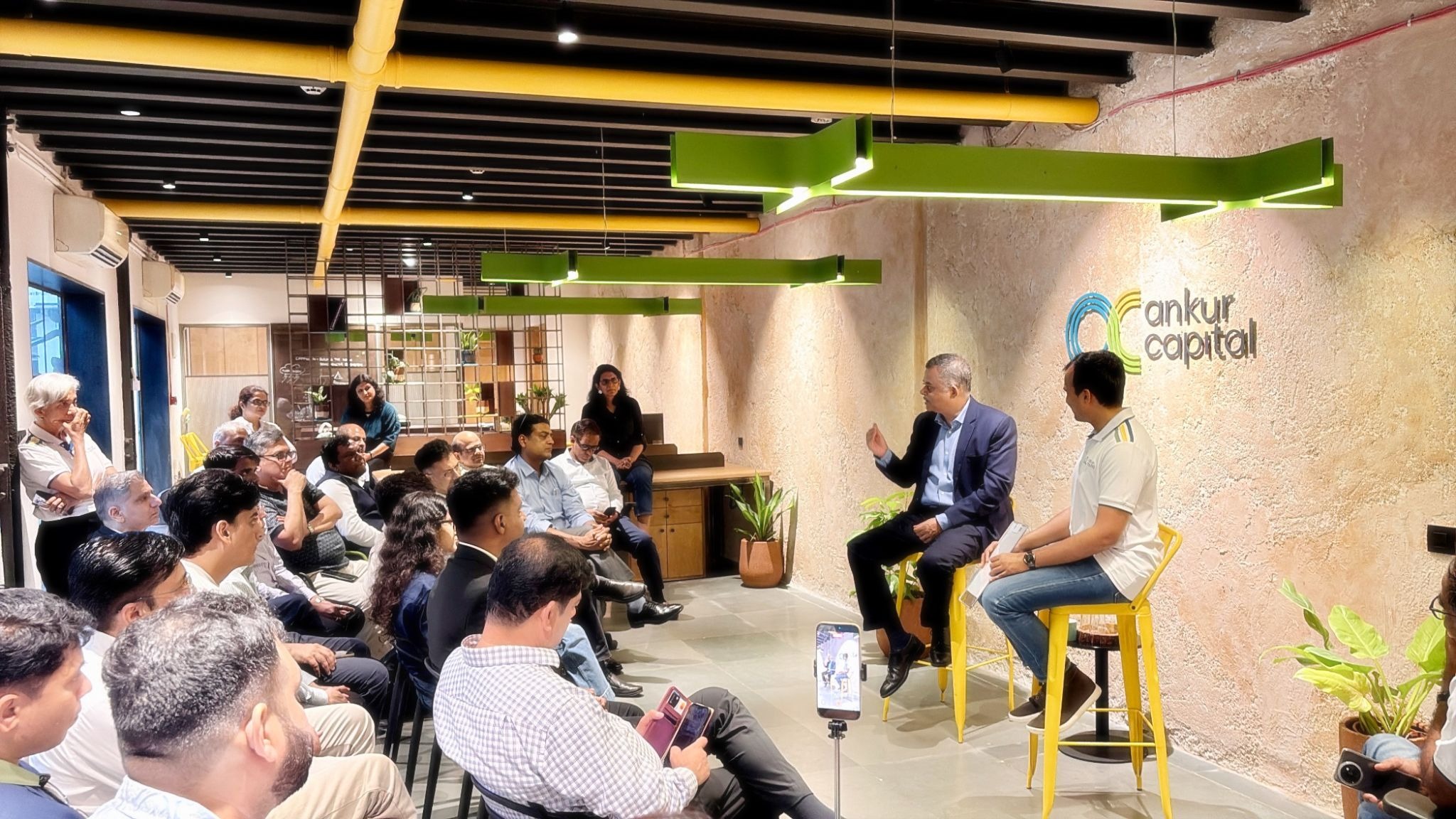
At a recent edition of Ankur Dialogues, we were privileged to host Neelkanth Mishra, Advisory Board Member of the India Semiconductor Mission, Chief Economist at Axis Bank and member of the Prime Minister's Economic Advisory Council, for a wide-ranging discussion with founders, investors, researchers and industry leaders.
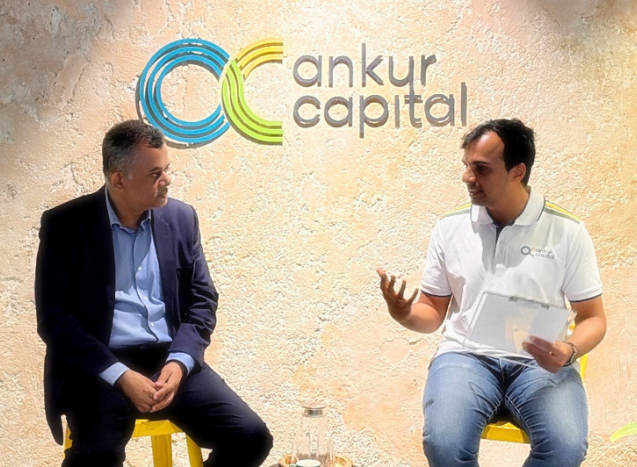
The conversation explored the opportunities and the realities of building globally competitive deep science driven semiconductor companies from India.
Much of the public discourse around semiconductors focuses on fabrication plants. While manufacturing remains critical, Neelkanth argued that India's biggest opportunity extends far beyond fabs.
The ecosystem spans:
Each represents an opportunity to build globally relevant companies.
As India's manufacturing footprint grows, these adjacent layers become increasingly important - not only for strengthening domestic capabilities but also for creating globally competitive technology businesses.
India already possesses one of the world's largest semiconductor design talent pools.
Neelkanth explained that this makes fabless chip design one of the most natural entry points for Indian startups. Design businesses require significantly lower capital than manufacturing while allowing founders to leverage India's deep engineering expertise.
Importantly, ISM 2.0 reflects this shift in thinking, with substantially increased support for semiconductor design.
The long-term vision is to create an ecosystem where Indian startups can collaborate closely with local manufacturing, testing and packaging capabilities, accelerating innovation across the value chain.
One of the strongest themes throughout the discussion was that capital alone cannot create a deep technology ecosystem.
Innovation depends on what Neelkanth described as the "plumbing" around startups:
India has made meaningful progress in creating funding mechanisms, but building this supporting infrastructure will determine the longer term return on investment for the capital deployed.
As he noted, the challenge is not simply making capital available - it is building enough high-quality startups and specialist investors capable of absorbing it.
Another encouraging trend is the growing number of experienced semiconductor professionals returning to India.
Engineers who have spent decades building products at global semiconductor companies are increasingly choosing to start companies here, bringing with them technical expertise, global networks and operational experience.
Combined with India's engineering talent, this creates a unique opportunity to build globally competitive deep-tech companies from India.
For investors, semiconductor startups require a different approach.
Unlike traditional software investing, evaluating semiconductor companies demands a much deeper understanding of technology roadmaps, manufacturing processes, IP ecosystems and rapidly evolving global markets.
As Neelkanth observed, venture capital firms need to develop new technical muscles to identify where long-term value will be created.
This resonated strongly with us at Ankur Capital. Our own journey into semiconductors began with fabless chip design. As the ecosystem has evolved, so has our investment thesis - expanding across semiconductor materials, equipment, manufacturing technologies, advanced packaging and AI-powered design tools. The opportunity is significantly broader than it appeared just a few years ago.
Perhaps the most important reminder from the evening was that semiconductors are fundamentally a global industry.
Success won't come from building products exclusively for India.
Whether designing chips, developing new materials or creating manufacturing technologies, Indian startups must be ready to compete on the global stage from day one.
That requires products that are globally competitive in performance, quality and cost - not simply domestically relevant.
India's semiconductor story is still in its early chapters.
Government policy, returning diaspora talent, world-class engineering capability, growing venture investment and increasing industry collaboration are creating the foundations of something much larger.
Building globally competitive semiconductor companies will require patient capital, deep technical expertise, strong institutions and close collaboration across academia, government, industry and investors.
Conversations like these are exactly why we created Ankur Dialogues - to bring together the people building India's next generation of deep science companies and explore the opportunities that will shape the country's innovation ecosystem for decades to come.
Further reading: To explore the broader trends shaping India's semiconductor ecosystem, read our report - Semiconductor Startup Landscape in India – A 2025 Perspective. It examines the emerging startup landscape, investment activity and opportunities across the semiconductor value chain.

Registered Corporate Office
Ankur Fincon Management Pvt Ltd
Unit 5 Jetha Compound,
Byculla (E), Mumbai 400027
Bangalore Office
Ankur Capital,
BHive Platinum, 271, 6th Main Rd,
HAL 2nd Stage, Motappapalya,
Indiranagar, Bengaluru,
Karnataka 560008.
Delhi Office
Avanta Business Centre Central Delhi
3rd floor, Ambadeep Building,
14, KG Marg, Barakhamba,
New Delhi, Delhi 110001